SQL fundamentals to advanced querying
Grain, filtering, aggregation, joins, CTEs, and window functions taught against realistic program data.
Better Data. Better Decisions. Stronger Communities.
Specialized training for California Health and Human Services database reporting professionals — a structured roadmap from SQL fundamentals through Oracle APEX interactive reporting to Power BI data modeling, with an in-browser query sandbox on synthetic Medi-Cal and public health data, hands-on labs, cheat sheets, and an AI Trainer for feedback.
Grain, filtering, aggregation, joins, CTEs, and window functions taught against realistic program data.
Interactive reports and grids, bind variables, faceted search, and report design that program staff can actually use.
Star schemas, DAX filter context, accessible visual design, and row-level security for departmental reporting.
Core reporting skills plus California-specific system tracks for county Health and Human Services agencies.
Query structure, filtering, grouping, and joins built on realistic health and human services data.
Start this pathSubqueries, CTEs, window functions, effective dating, and validation techniques for production reporting.
Start this pathInteractive reports, interactive grids, and report design patterns for county program staff.
Start this pathStar schemas, relationships, DAX, and accessible dashboards for management reporting.
Start this pathPractical reporting instruction for California's statewide automated welfare system.
Enroll to get startedTraining based on California county CalWIN reporting concepts, database relationships, and reporting practices.
In developmentTraining focused on California Child Welfare Services/Case Management System database structures, relationships, and reporting concepts.
In developmentMeet your instructor
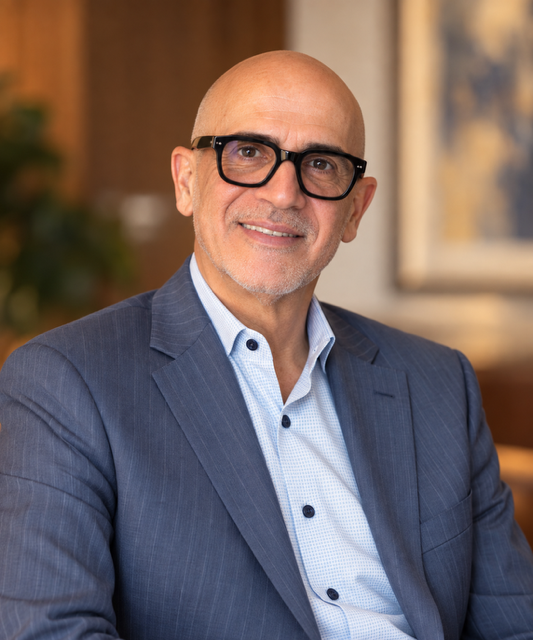
Vic Shaverdian is a database management, data reporting, and analytics professional with more than 30 years of experience, with deep specialization in California Health and Human Services systems.
His experience spans multiple generations of California Health and Human Services technology, beginning with CDS (County Data Systems), progressing through CalWIN, and continuing into today's CalSAWS environment. He also has extensive knowledge of CWS/CMS, California's Child Welfare Services application and database.
Database concepts and database reporting through programs associated with UC Davis, UC San Francisco, UC San Diego, and UC San Bernardino, plus product- and solution-specific training for county clients.
Worked for or collaborated with Northrop Grumman, Deloitte, HP, IBM, CGI, and EY.
His particular strength is taking complicated database structures, relationships, SQL concepts, reporting requirements, and technical terminology and explaining them in practical, understandable terms.
The Academy is not simply about learning SQL. It teaches analysts how to think like report writers — the discipline behind every number that reaches a program manager, a board, or the public.
Looking ahead
AI is the future of data analysis and reporting. But as AI becomes more powerful, understanding the data behind the AI becomes more important than ever.
AI can generate SQL, discover patterns, summarize large datasets, and produce sophisticated reports rapidly. However, an answer is not necessarily correct simply because it sounds convincing.
In complex Health and Human Services databases, accurate reporting depends on understanding relationships between tables, business rules, effective dates, historical records, program logic, data quality, and the meaning behind individual data elements.
Without that knowledge, AI can produce misleading results through incorrect assumptions, incomplete context, algorithmic bias, or hallucinations. The next generation of report writers therefore needs the ability to question, validate, and verify AI-generated results against the underlying data and business reality.
“It is not about competing with AI. It is about understanding the data well enough to know when AI is right — and when it isn't.”
Privacy by design. Every dataset in the sandbox is synthetic. No real beneficiary, provider, or case information is stored, and learners are reminded never to paste confidential records into the sandbox or the AI Trainer.